
B2B Distributor · Zurich, Switzerland
Wholesale organic sweeteners for Switzerland
Are you looking for a supplier capable of delivering erythritol, high-purity stevia, and dietary fibers in professional quantities, with compliant documentation and a contact person who understands the bakery business?
- Product families
- Polyols · steviol glycosides · fibers
- Standard packaging
- 25 kg bags · 1 t big bags
- Samples
- 1 to 5 kg
- Delivery
- From Switzerland
What we deliver, and to whom
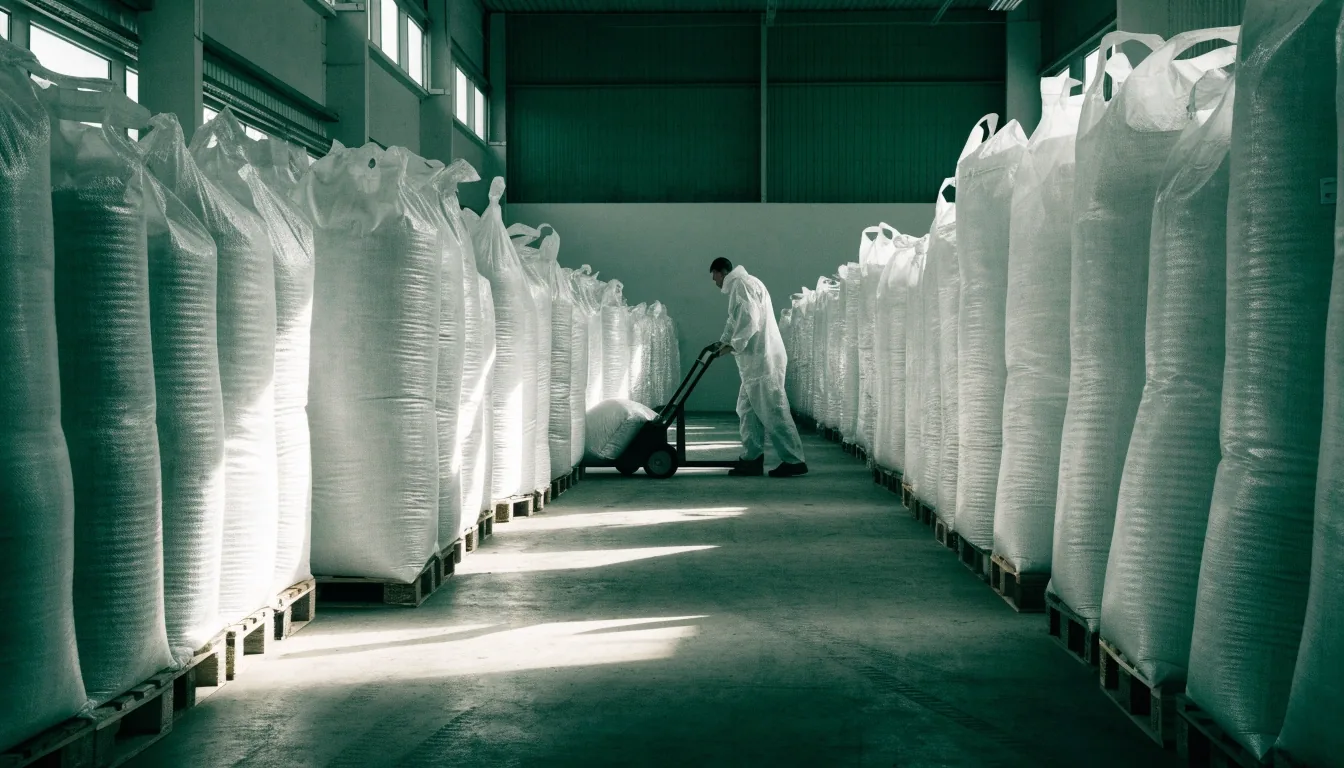
Our catalog revolves around three families: polyols, high-purity steviol glycosides, and functional fibers like inulin and acacia fiber. 25 kg bags and one-ton big bags are our standard format; we do not ship retail.
If your workshop works with less than 100 kg per month, let us know anyway: we will guide you toward a suitable format rather than overselling to you.
Samples before commitment
Before a first ton-order, we send 1 to 5 kg samples depending on the product. This is the time to test your recipe, not after filling a silo. Specify the desired particle size: a fine powder disperses differently than a crystal in a dry mix. For fibers, a test on a single batch is often enough to see if the texture holds.
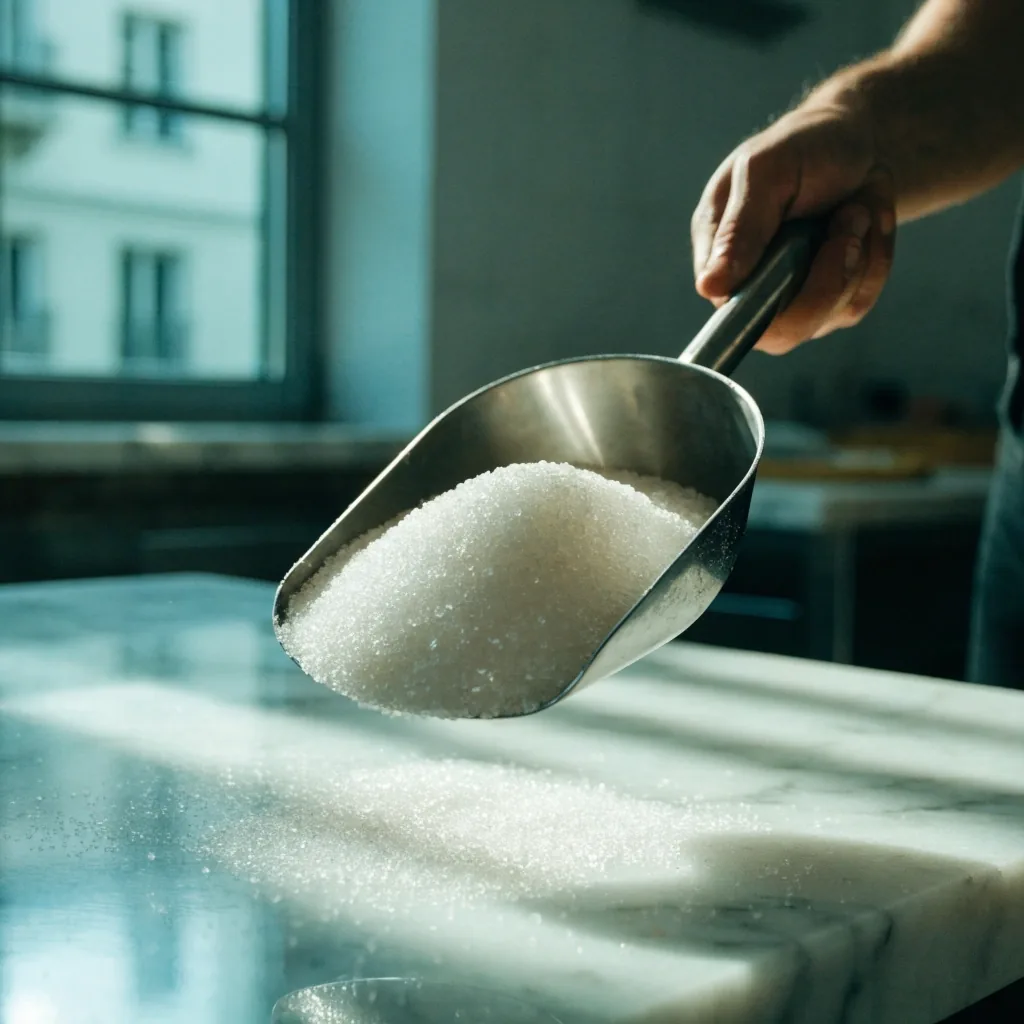 Erythritol · fine powder
Why a 1:1 blend changes your dosage
Replacing sucrose identically in a pastry recipe requires a product whose sweetening power and mass match what the recipe expected. A 1:1 blend based on erythritol and high-purity stevia allows you to keep your base proportions and then correct the texture, not the other way around. This is useful when your team does not want to rewrite every technical sheet.
On the other hand, for a drink or a cream, pure stevia or a concentrated liquid gives finer control over residual bitterness. We detail these trade-offs on the product page.
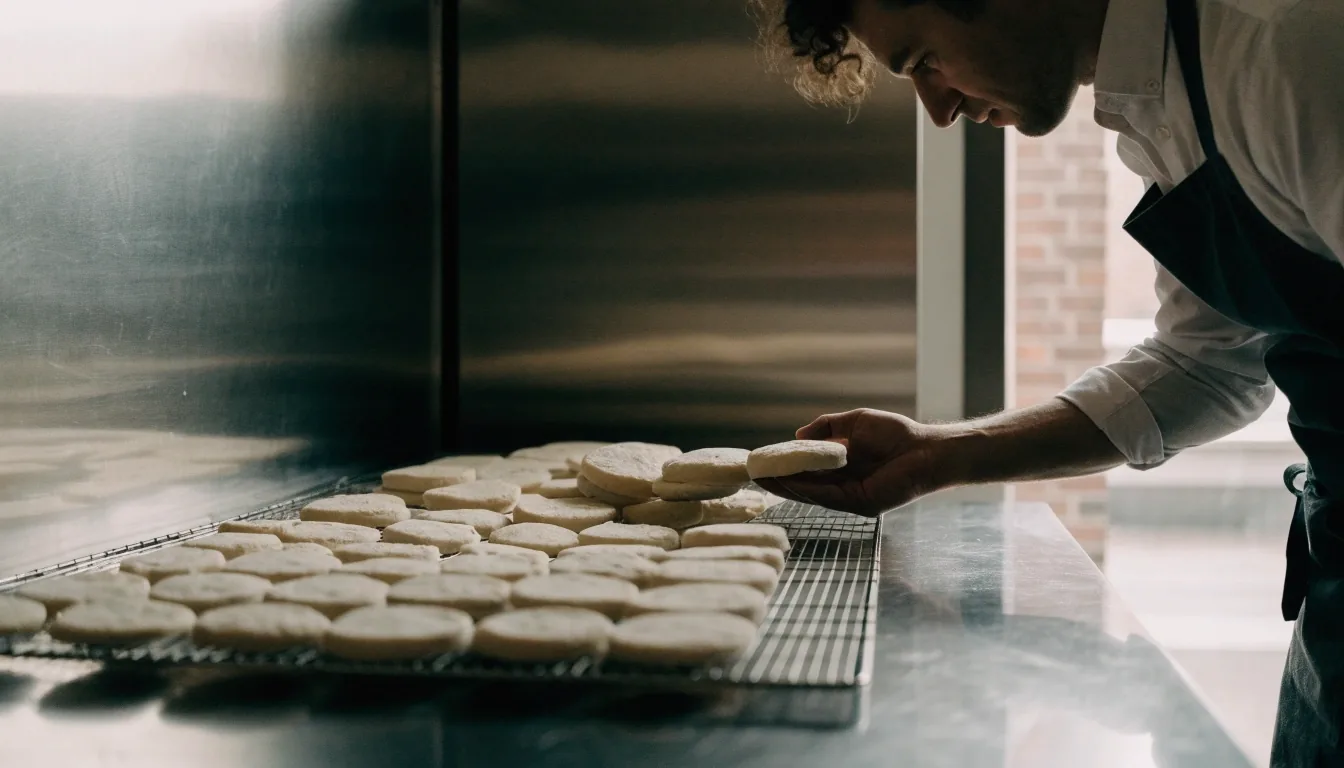
What baking does to a sweetener
Erythritol does not caramelize like sugar: it melts, then recrystallizes upon cooling. This gives a clean crunch on glazes or decorations, but a paler color on dough. Recipes that rely on a brown crust must adjust the temperature or add a small portion of organic whole sugar for the Maillard reaction.
Stevia, on the other hand, remains heat-stable but adds a bitter note if the dosage exceeds what the recipe tolerates. We explain these behaviors product by product, because a buyer who understands baking orders better.
To adjust in recipe
- Crust coloration Add a portion of organic whole sugar
- Residual bitterness Dose stevia in increments
- Gloss after cooling Check after recrystallization
Dietary fibers: replacing sugar without breaking the texture
When you remove sugar, you also remove volume and water retention. Inulin and acacia fiber compensate in part: they provide mass, retain moisture, and improve mouthfeel in biscuits, special breads, and dairy preparations. In a sponge cake, replacing more than 20 to 30% of the sugar with fibers often requires reviewing liquids and the leavening agent. We prefer to say it clearly rather than letting people believe that a simple swap works everywhere.
What fiber brings
- Volume where sugar provided it.
- Moisture retention for shelf life.
- A fuller mouthfeel in biscuits and special breads.
Origin and traceability of raw materials
Our batches are documented: raw material origin, batch number, production date, certificate of analysis. For stevia, the purity of steviol glycosides determines the final taste, so we indicate the rate on each sheet. A buyer who needs to respond to an organic audit can request the full file before ordering.
The erythritol we distribute is produced by fermentation from corn. We do not replace the Swiss references already installed in your workshops: we provide the sweetening and fibrous building block that comes alongside.
3
ingredient families: polyols, steviol, fibers
The Swiss landscape you are part of
The Swiss sugar-free market was built on old benchmarks, long associated with table substitutes, and on organic manufacturers whose positioning has shifted towards formulations richer in protein and lower in sugar. Alongside this, organic and fair-trade sugar remains a benchmark for traceability, with raw cane sugar, icing sugar, or coconut sugar sourced from small producer organizations.
We do not replace these products: we provide the sweetening and fibrous building block that comes alongside. Innovations in sweeteners and fibers are often discovered upstream, at professional functional ingredient trade shows. That is where formulators see the new generations of blends arriving, and we follow these developments to anticipate what our bakery clients will ask for in two years.
Formats and logistics in Switzerland
We ship from Switzerland to the three linguistic regions, with lead times announced at the time of order and not promised in advance. Full pallets for regular production, parcels of a few bags for trials.
Good to know
- Storage Protected from humidity, especially for erythritol and inulin
- Multi-site Delivery to each site with separate vouchers
- Trials A few bags, before a full pallet
Pricing: how we invoice
Our prices are set per kilogram for small professional quantities and per ton for regular volumes, with an intermediate tier for full pallets. The price depends on the product, purity, and packaging. We do not publish artificial slashed prices: a quote reflects your actual volume and the frequency of your orders.
Small professional quantities, trials, and medium-scale production. Ideal for testing a recipe on a few bags before committing.
Intermediate tier for regular production: the price per kilo drops as soon as the pallet is full.
Regular volumes, one-ton big bags. The quote reflects your actual volume and the frequency of your orders.
The detailed grid and how to request a quote are on the pricing and ordering page. Send us your specifications: we will check compatibility before confirming.
Consult prices per kilo and per tonQuality and compliance
Each raw material arrives with its documentation: specification, certificate of analysis, organic certification according to the supply chain. For Swiss specifications, it is this chain of documents that counts, not a logo on a page. If your end client requires a precise declaration, send us their specifications and we will check compatibility before confirming.
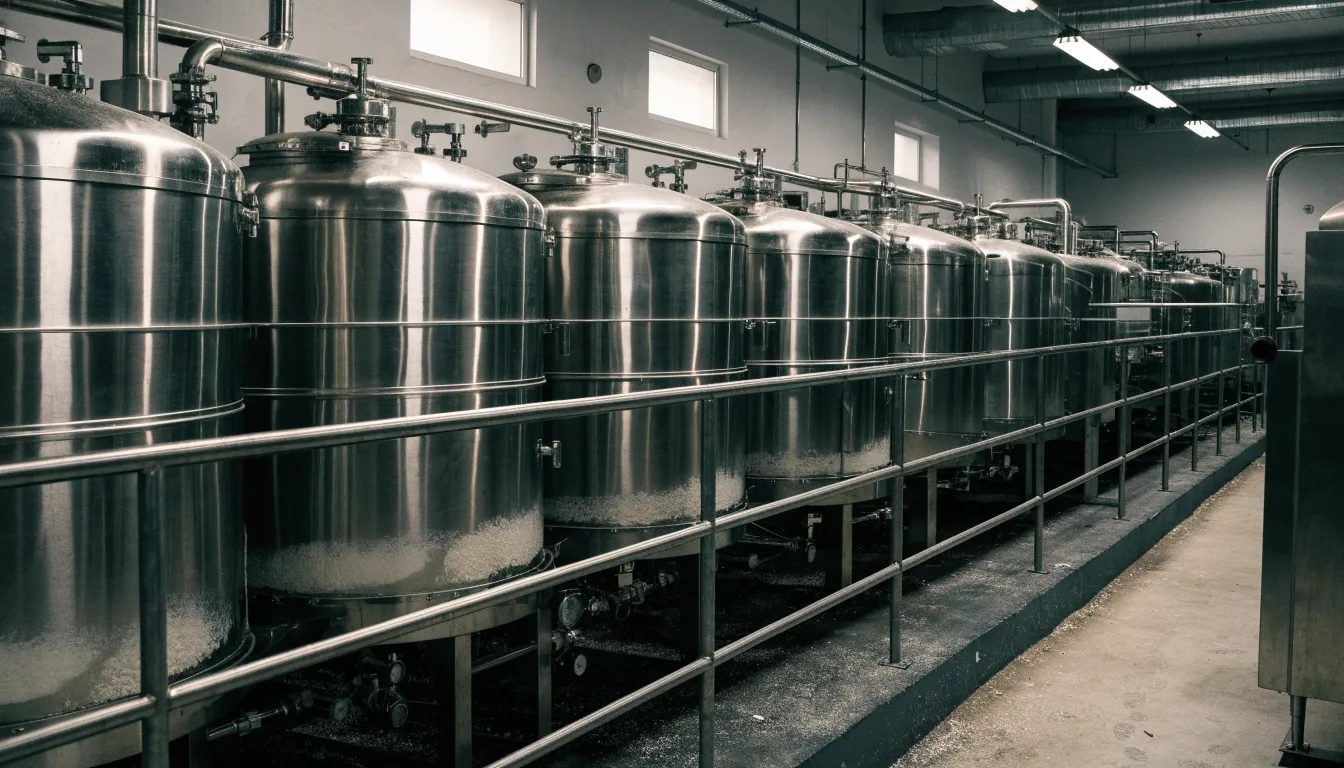
Sustainable production, without the talk
Our commitments focus on verifiable points: fermentation supply chains, recyclable packaging when the product allows it, optimization of pallets to reduce travel. We do not claim that production has no impact.
The sustainable production page details what we control and what still depends on our suppliers.
What we control
- Choice of fermentation supply chains.
- Recyclable packaging when the product allows it.
- Optimization of pallets to reduce travel.
Innovations in sweeteners and fibers are often discovered upstream, at professional functional ingredient trade shows, where formulators see the new generations of blends arriving.
We follow these developments to anticipate what our bakery clients will ask for in two years. This is also why our product sheets indicate purity and packaging rather than a sales pitch.
Frequently asked questions from buyers
Which organic sweeteners hold up best during baking in professional bakeries?
Erythritol handles heat well but does not caramelize like sugar; high-purity stevia remains stable but becomes bitter beyond a certain dosage. A 1:1 blend is often the simplest to integrate into an existing recipe, with an adjustment to the coloring if you rely on a brown crust.
What is the practical difference between pure erythritol, pure stevia, and a 1:1 blend?
Pure erythritol provides bulk and crunch, with a sweetening power lower than sugar. Pure stevia sweetens strongly but without volume. The 1:1 blend aims to replicate the behavior of sugar to avoid rewriting the proportions of your technical sheets.
Which formats are suitable for purchases in kilograms or tons?
25 kg bags for trials and medium production, one-ton big bags for regular manufacturing. 1 to 5 kg samples are used for recipe tests before commitment.
How to verify that a sweetening ingredient is compatible with Swiss organic specifications?
Request the specification, certificate of analysis, and organic certification of the supply chain for the batch concerned. Send us your specifications: we will check compatibility before confirming the order.
Which fibers help replace part of the sugar without breaking the texture?
Inulin and acacia fiber provide volume and retain moisture, useful for biscuits, special breads, and dairy preparations. Beyond 20 to 30% sugar replacement, plan to adjust liquids and the leavening agent.
How to adjust taste, shine, and coloring when reducing sucrose?
Plan for a small portion of organic whole sugar for coloring, test the stevia dosage in stages to avoid bitterness, and check the shine after cooling because erythritol recrystallizes.
Ready to order for your volume?
Send us your specifications and target volume. We will respond with the appropriate formats, batch documentation, and a quote that reflects your actual volume.
Alpina Bio Ingredients AG
Bahnhofstrasse 42
8001 Zürich, Schweiz
To go further
The logos of Swiss organic certifications and the person responsible for the site content appear on the Impressum page, as required by local legislation.